
What is Clinical Pilates, and how is it different from regular Pilates?
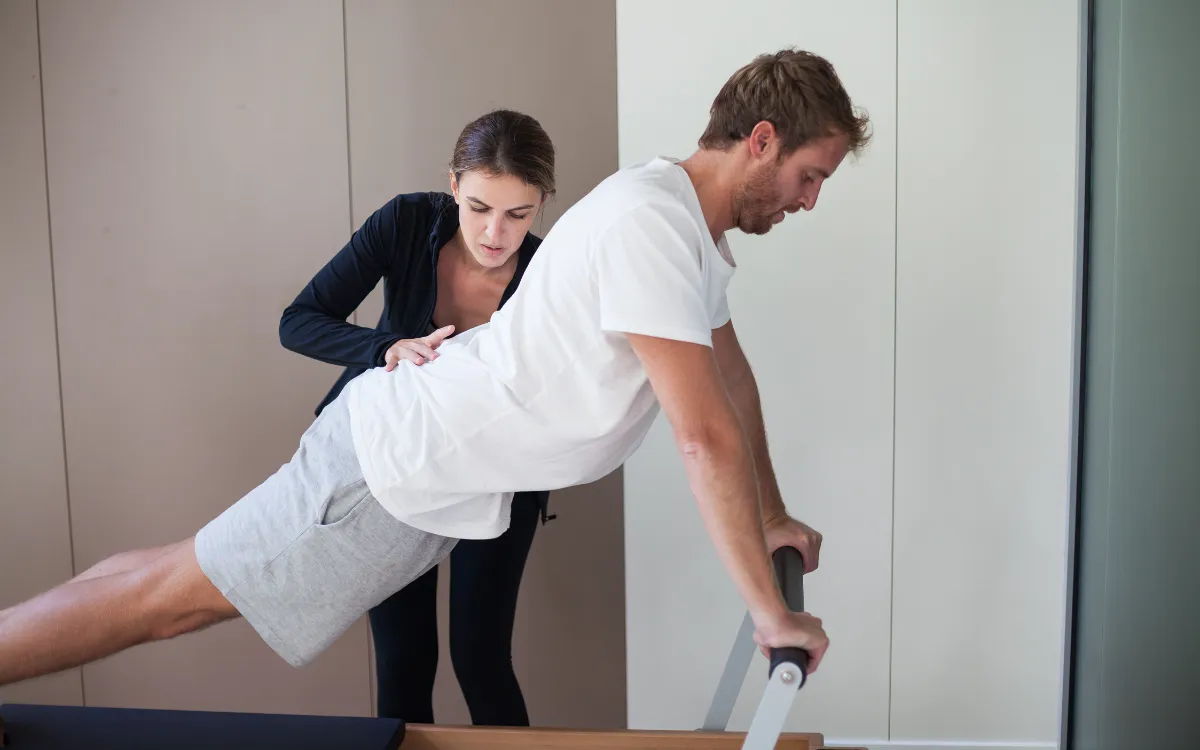
Clinical Pilates adapts Pilates exercises for rehabilitation. Instead of a one-size-fits-all class, the exercises are customized for an individual's condition, or for groups with similar conditions.
It is done under a trained professional, such as a physiotherapist, and focuses on the deep muscles that stabilize the lower back and pelvis [1].
The benefits physiotherapists rank highest are better body awareness, less fear of movement, and improved muscle strength [2].
How can Clinical Pilates help athletes, including those recovering from an injury?
Pilates began as a rehabilitation method, and its exercises can be scaled from gentle strengthening to a workout challenging enough for skilled athletes [3]. In athletes, 4 to 14 weeks of Pilates added to regular training improved balance, agility, core strength, muscle strength, flexibility, muscular endurance, and coordination across sports such as badminton, cricket, volleyball, running, archery, and dance [4].
For athletes returning from injury, physiotherapists who use Pilates say controlled movements let people work within a pain-free range and slowly build confidence. Glute exercises such as bridging and clams are the most commonly used [2].
Clinical Pilates is best treated as a complement to sport-specific rehabilitation, with timing guided by your physiotherapist. Recent fractures or surgery may need clearance first [2].
What conditions can Clinical Pilates help with?
Research has looked at Pilates for chronic lower back pain, arthritis, osteoporosis, and multiple sclerosis [1].
Lower back pain is the condition most physiotherapists agree it can help, followed by hip problems and pain at the front of the knee, with more than 20 conditions mentioned overall [2].
Pilates supports recovery rather than curing a condition, and the right program depends on your diagnosis.
How often should Clinical Pilates be done?
Most physiotherapists prefer sessions of 30 to 60 minutes. Therapists in private practice mostly favor one class a week, while a small majority of those in the UK's National Health Service favor more than one. About 60% recommend short home exercises every day, especially during a flare-up, then tapering as symptoms settle [2].
Is it suitable for all ages?
Pilates has been studied in children, adults, and older adults. In children, it may support coordination, posture, and balance. In adults, it supports fitness and stress reduction. In older adults, it supports balance and flexibility, which helps prevent falls [1]. Exercises are adjusted to each person's ability.
What equipment does Clinical Pilates used?
Clinical Pilates is done on mats or specialized equipment. The reformer has a sliding carriage, springs, and adjustable straps, and you can lie, sit, or stand on it while it provides resistance or support. Other equipment includes the Cadillac, Wunda chair, and ladder barrel [1].
Can Clinical Pilates help with weight loss?
IIt may help a little, but it isn't a weight-loss program. In 11 randomized trials of 393 adults with overweight or obesity, Pilates led to an average loss of about 2.4 kg, a drop of about 1.2 points in BMI, and about 4 percentage points less body fat. It did not significantly change waist circumference or lean muscle mass [5].
Results were stronger in programs lasting more than 10 weeks (about 3.3 kg lost on average) and in people with obesity. Most programs ran 8 to 24 weeks with about three 60-minute sessions per week. The evidence was rated low to moderate quality, and the studies did not compare Pilates with other types of exercise or include diet changes. These trials tested Pilates in general, not Clinical Pilates specifically. Pilates is a reasonable option for people who find other exercise hard to stick with, but diet and overall activity matter too [5].

Heath Matthews Physio brings you better health and fitness through technology and expertise.
Heal, Achieve, Succeed with HMP