
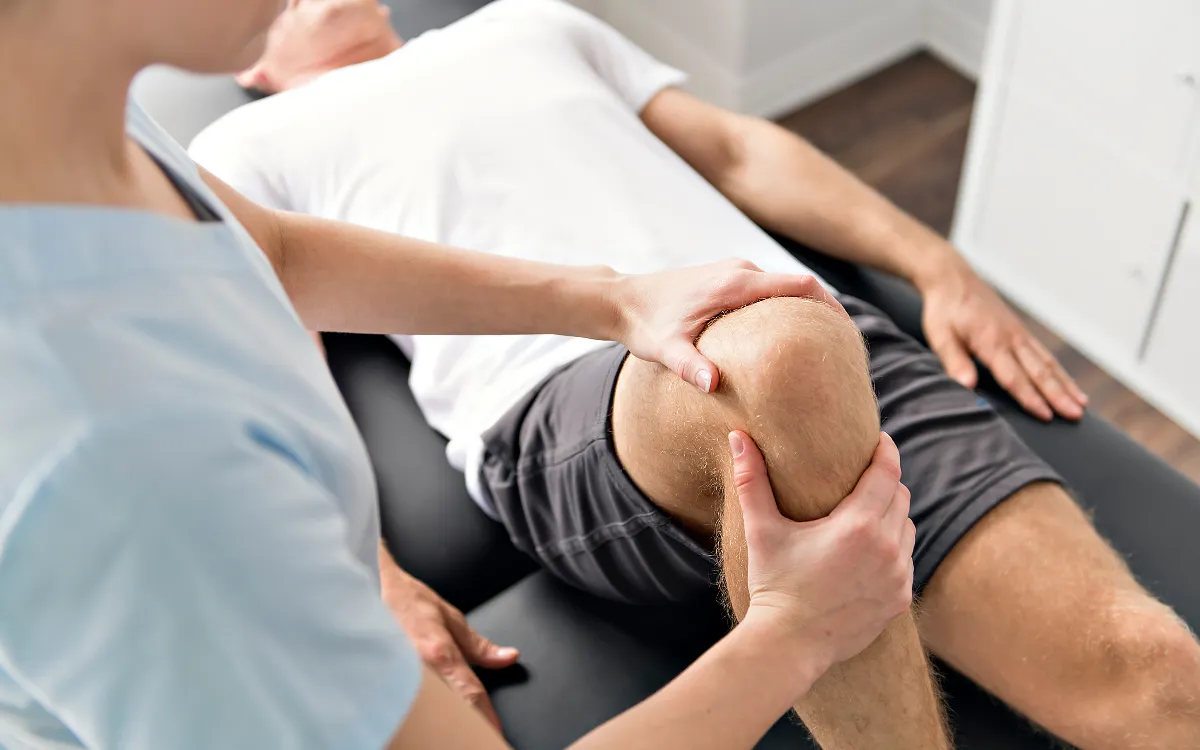
What does a physiotherapist do, and what conditions do they treat?
Physiotherapy is a multidisciplinary approach to injury and illness. Its aims are to treat and rehabilitate people after an injury or surgery, to prevent injuries, and to get people back to their activities in the shortest safe time [1].
Beyond injuries such as fractures, knee pain, and shoulder pain, physiotherapy also has a role in the prevention, conditioning, and rehabilitation of conditions such as diabetes, menopause, obesity, heart and lung disease, hypertension, and asthma. It combines exercise, nutrition, stress management, and lifestyle changes [1].
Can physiotherapy help prevent injuries?
Strength plays an important part. Stronger muscles help protect and stabilize joints and help tissues cope with the repeated forces placed on them during activity [1]. Injuries tend to return in the weaker regions of the body, so an injury can be a warning that an area cannot yet handle the stress of your sport [1].
Prevention advice includes proper training techniques, a routine warm-up and cool-down, and strengthening of muscles and joints [1]. Balance and proprioceptive exercises are also linked with a lower risk of future injuries, particularly in sports with complex movements [2].
What happens in a first physiotherapy session?
Your physiotherapist starts with a detailed history of your symptoms: where they are, what they feel like, how they behave, and when they began. A physical examination follows, and a full posture, walking (gait), and movement assessment may be added. Sometimes further tests are needed to confirm the diagnosis [1].
Treating symptoms without first finding the underlying cause is not enough, so the assessment looks at every factor contributing to your pattern of symptoms before a specific treatment plan is set [1]. Your program is individual to you and can include exercises, changes to posture, taping or strapping, and a home exercise program [1].
What treatments do physiotherapists use?
Most programs combine several approaches. Manual therapy, such as joint mobilization and soft tissue work, helps improve joint movement, ease muscle stiffness, and reduce pain, which makes exercise easier to do well [2]. Progressive strength training rebuilds muscle and lowers the chance of re-injury. Balance and body-position-sense (proprioceptive) training helps retrain coordination, and aquatic therapy gives a low-impact option for lower-limb injuries [2]. Technology such as wearable trackers, electrical muscle stimulation, and cold therapy may also be used, but it supports hands-on care rather than replacing it [2].
A review of rehabilitation studies found the most promising results from combining manual therapy, strength and conditioning, proprioception training, mental health support, and wearable technology. It also noted that the studies varied in size, injury types, and length of treatment [2].
What are the stages of recovery from a sports injury?
The first stage aims to reduce pain and swelling and protect the healing tissues. Once these settle, exercise is added, usually mobility and flexibility work first and strengthening later [1]. In the final stages, the program becomes specific to your sport, with functional strength exercises such as single-leg squats, jumps, and plyometric drills, plus balance training [1].
You move from one stage to the next based on how well you can function, not on how many weeks have passed. Sport-specific functional testing is used to decide when to progress, and training is monitored so that full activity does not resume before full recovery [1].
How do I know when I'm ready to return to sport?
Being pain-free does not mean you are fully fit [1]. For example, a footballer recovering from a hamstring injury may have equal flexibility and strength on both sides and be able to jog without pain, yet still feel weakness when joining a game.
The gap is closed by gradually building running speed (half pace, then three-quarter pace, then full effort), adding strength exercises where the hamstrings work with other muscles, including dynamic and eccentric hamstring work, and then reintroducing kicking, ball skills, and agility drills at three-quarter speed before full speed [1].
Readiness is also mental. Injured athletes often experience anxiety, low mood, fear of re-injury, and reduced confidence, which can delay full recovery if they are not addressed [2]. Returning too early matters because injuries can come back: in elite Australian football, about one in three hamstring injuries recur on return to play [3].
Can I keep training while injured?
Often yes, with changes. Alternative training lets you stay fit without stressing the injury, such as water running with a flotation belt or cycling instead of running. Only the injured part needs to rest, not the whole body.
A footballer with a groin strain, for example, can use the recovery period to build leg, trunk, and upper-body strength [1]. Maintaining aerobic fitness is one of the main goals of rehabilitation [1].
Your physiotherapist can tell you what is safe for your particular injury.
References
1. Khurana, B., Bhatia, S., & Singhal, V. (2021). Role of sports physiotherapy and rehabilitation in healthcare delivery: Need and the reality. Sambodhi (UGC Care Journal), 44(1), 49–54.
2. Kaur, N., Kumar, S., & Partap, Y. (2025). Rehabilitation strategies for sports injuries: A multidisciplinary perspective. International Journal of Science, Architecture, Technology and Environment, 2(5), 234–242. https://doi.org/10.63680/mhbgf4x3s6f7h3v2
3. Hoskins, W., & Pollard, H. (2010). The effect of a sports chiropractic manual therapy intervention on the prevention of back pain, hamstring and lower limb injuries in semi-elite Australian Rules footballers: A randomized controlled trial. BMC Musculoskeletal Disorders, 11, 64. https://doi.org/10.1186/1471-2474-11-64

Heath Matthews Physio brings you better health and fitness through technology and expertise.
Heal, Achieve, Succeed with HMP